Platform architecture
Not a device. A synchronized neurocognitive engine.
Mentalness turns a multi-device sensory stack into one synchronized brain-training platform: sensory inputs, cognitive tasks, biosignal analytics, RF-aware timing and AI personalization working as one loop.
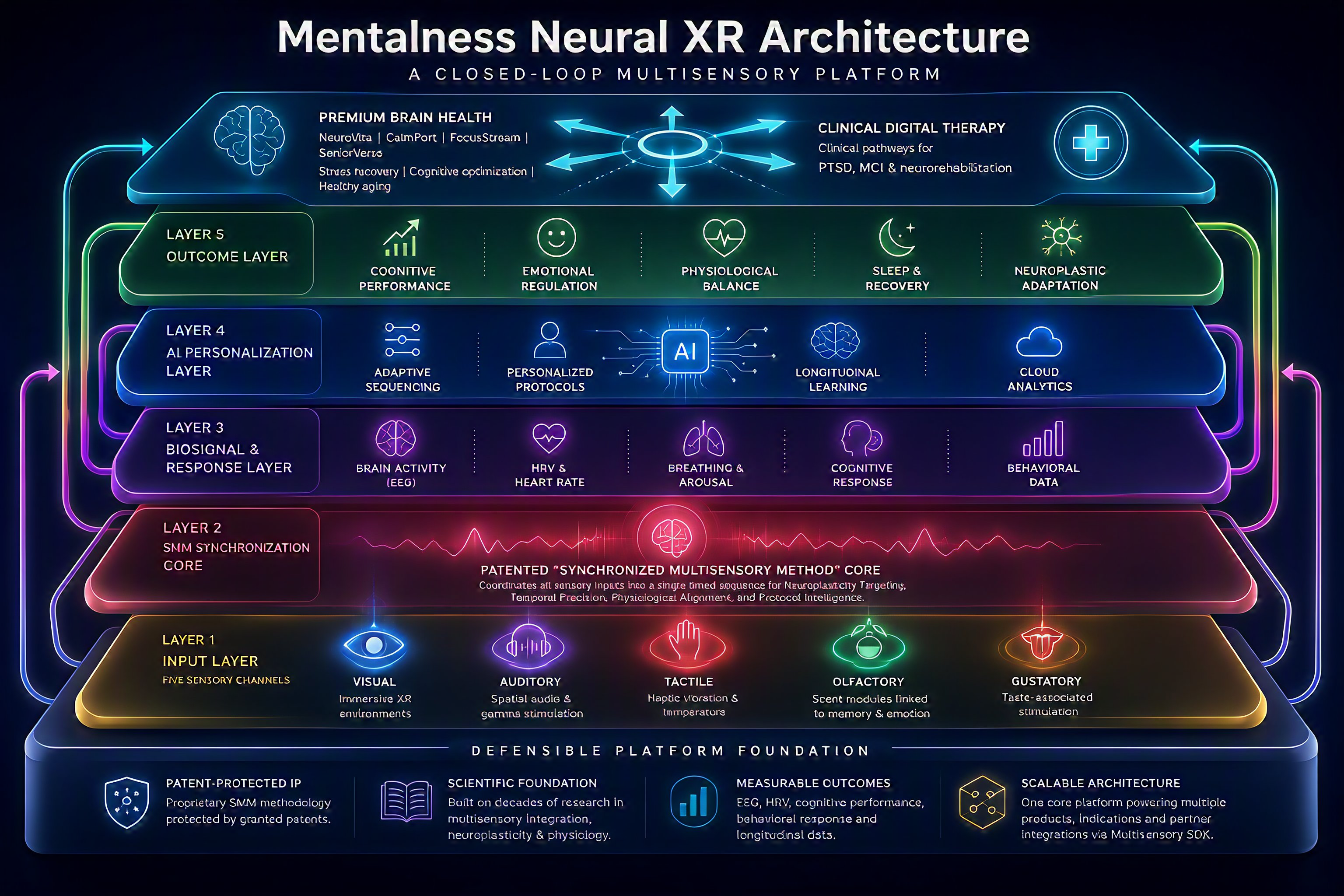
Mentalness platform architecture: multisensory inputs, SMM synchronization core, biosignal response, AI personalization and measurable outcome pathways.
The core model
Five platform layers, one synchronized loop.
The platform is designed to move beyond stimulation by closing the loop between sensory cue, cognitive task, biosignal response, AI adaptation and measurable progression.
Five sensory channels
Visual, auditory, tactile, olfactory and gustatory stimuli delivered through the hardware combination that best fits each program.
Synchronized Multisensory Method
The protected timing method that coordinates sensory events, cognitive execution and physiological response with millisecond-level intent.
Biosignal and behavioral measurement
EEG, HRV, breathing and arousal, cognitive response, engagement, safety and adherence metrics captured as objective signals.
Personalization and protocol intelligence
Session sequence, stimulus intensity, sensory timing, cognitive load, recovery pathway and progression adapted over time.
Applied programs and clinical pathway
Cognitive performance, emotional regulation, physiological balance, sleep and recovery, neuroplastic adaptation and clinical-readiness signals.
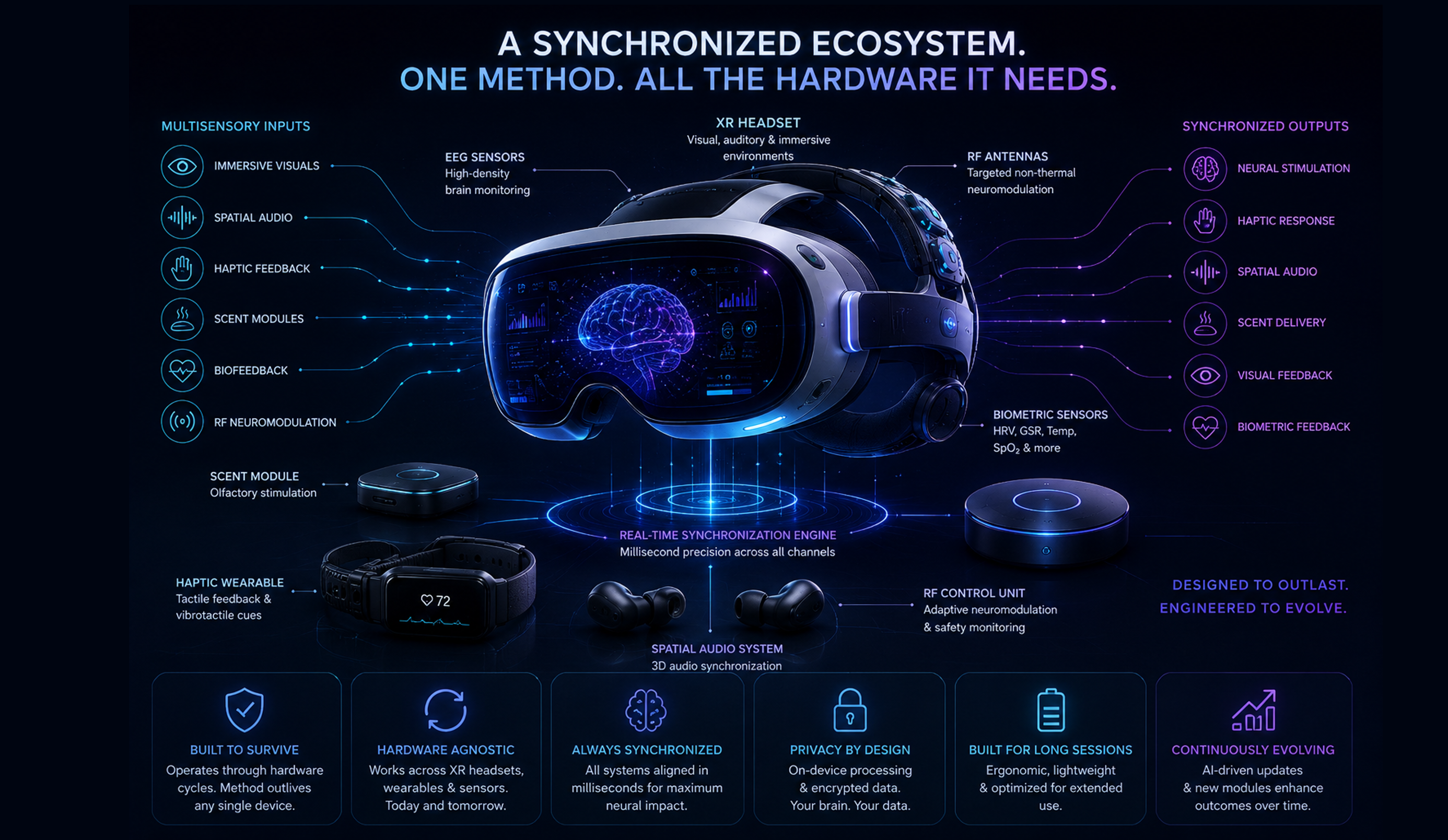
Device-agnostic by design
The value is the synchronized brain layer, not a single device.
Mentalness can operate through XR headsets, screens, headphones, spatial audio systems, haptic wearables, scent modules, RF systems and biometric sensors. The strategic layer is the synchronization method that sits above hardware cycles.
Eight coordinated layers
What the platform synchronizes.
Visual
Light, motion, patterning, visual tasks and immersive XR environments.
Auditory
Binaural, spatial, rhythmic and gamma-frequency auditory stimulation.
Tactile
Haptic vibration, pressure and timing cues linked to task execution.
Olfactory
Scent cues associated with memory, context and emotional salience.
Gustatory
Taste-associated cues for reward, motivation and associative learning pathways.
Cognitive task
Attention, working memory, inhibition, executive control and recall exercises.
Biosignals
HRV, EEG, breathing, arousal, behavioral response, adherence and tolerability.
AI personalization
Adaptive sequencing, intensity, timing, cognitive load, feedback and progression logic.
Platform capabilities described here include current development work and planned integrations. Future clinical use requires completed validation, regulatory assessment and appropriate approvals.