
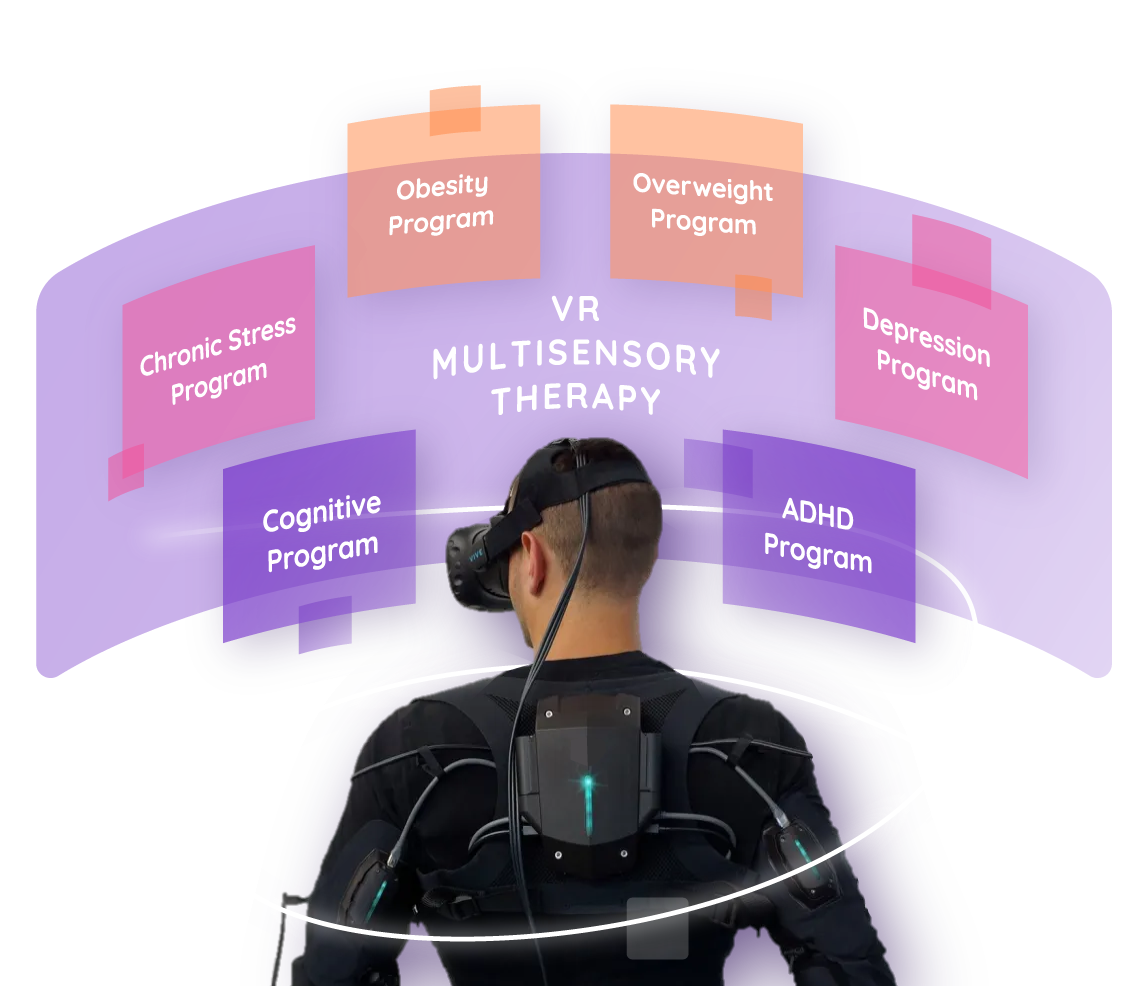


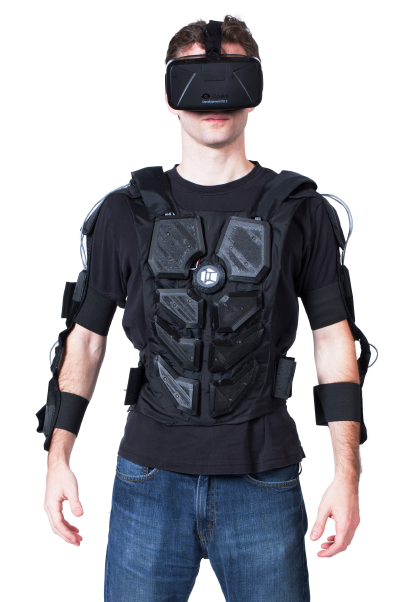


Welcome to the Wellverse Multi-sensory VR Therapy system

Talking about neuroplasticity

Neuroplasticity refers to the brain’s ability to change and adapt in response to different experiences, behaviors, and environments.

Multisensory stimulation methodology involves stimulating multiple sensory modalities simultaneously, such as sight, sound, touch, taste, and smell, to enhance brain plasticity.

The problem

+792 million people exhibit impaired or maladaptive neuroplasticity from mental illness, aging, obesity, traumatic injury, substance abuse or other medical conditions.

We build the first VR therapy to control human behavior

COGNITIVE SPACE

Overweight

Mental disorders

Traumatic brain injury

Neurodegenerativa diesase

mentalness wellbeing

Person behaviour modification

Multisensory stimulation is one of the processes with the greatest capacity to modify brain circuits associated with learning and behavior modification.

We have been stucying the brain and the possibility of modifying its neutral connections by learning though sensory systems for 20 years.

sensory
integration

cognitive training

initial medical status

vr-2-2

therapy medical status

Mentalness neuroplasticity score

Brain computer
interface

Virtual reality synchronized with multi-sensort stimulation could improve people’s quality of life, prevent different psychosocial and learning disorders and, finally, as a rehabilitation method for many diseases

Building mentalness program

By using Mentalness Methodology to create specific Cognitive Therapy programs we improve personal behavior and use neuroplasticity as new Medicine.

DEFINE
PROBLEM

BUILD MENTALNESS
PROGRAM

Enroll Patients
to program

Validate Mentalness Program

Competitive advantages of Mentalness Wellness

Patent-pending
technology

Strong clinical
data and results

Team of industry
leaders in the
medical AI space

High margin
business model

Wellbeing
3.0
Platform rather
than a point solution

Our Roadmap

2008-15

VISION TACTILE

blind people

Occipital Neuroplasticity by tactile stimulation

2016

PERCEPTIVE

Attention ADHD

Tactile Stimulation increasing activity parietal brain plasticity

2019

SENSORY ESTIMULARION

ADHD

Reorganization posterior towardfrontal cortical ADHD

2021

EDUCATION LEARNING

ADHD

Sensory Bottom-up process increase learning
dot
dot
dot
dot

sCIENTIFIC BACKGROUND

R&D

dot
dot
dot
dot
dot
Prototype development

12 months

Laboratory evaluation
1 month allows correction of technological errors
Evaluation in real situation
1 month allows correction of errors of product-person integration
Evaluation of a small group of various ages
5 months allows real assessment of the effectiveness of the product
Development of the equipment for the entire population

Our Roadmap

2021

EDUCATION LEARNING

ADHD

Sensory Bottom-up process increase learning

2019

SENSORY ESTIMULARION

ADHD

Reorganization posterior towardfrontal cortical ADHD

2016

PERCEPTIVE

Attention ADHD

Tactile Stimulation increasing activity parietal brain plasticity

2008-15

VISION TACTILE

blind people

Occipital Neuroplasticity by tactile stimulation

dot
dot
dot
dot
dot
dot
dot
dot
dot
Prototype development
9 months
Laboratory evaluation
1 month allows correction of technological errors
Evaluation in real situation
1 month allows correction of errors of product-person integration
Evaluation of a small group of various ages
5 months allows real assessment of the effectiveness of the product
Development of the equipment for the entire population

Occipital Neuroplasticity by tactile stimulation

Founders team

Tomás Ortiz

MD. PHD. NEUROSCIENTIST

Department of Legal Medicine, Psychiatry and Pathology, Faculty of Medicine, Complutense University. Madrid. Spain

+300 Articles in Neuroscience, International University collaboration: Harvard Medical School, California University San Francisco, University of Texas Rio Grande, Institute of Neurology London, USF Florida…

Multisensory stimulation is one of the processes with the greatest capacity to modify brain circuits associated with learning and behavior modification.

Virtual reality synchronized with multi-sensory stimulation could improve people’s quality of life, prevent different psychosocial and learning disorders, and, finally, as a rehabilitation method for many diseases

alberto sole

Physicist & Data Analyst
24 years in the healthcare industry (starting at WHO).Serial Entrepreneur founding 5 companies in the healthcare space in the US and EU.
DR. JULIO BONIS
Physician and Data Scientist
MD and MBA MSc in Bioinformatics and Epidemiology. 20+ years of experience in medicine and medical AI. Extensive experience in medical NLP and biostats.

Advisor team

DR. Gustavo Tafet

MD PhD. Psychiatrist
DR. David L. Perez

MD PhD. Neurologist

DR. Laura Ortiz-Terán

MD PhD. Neuro Radiologist

MD PhD. Psychiatrist
Department of Psychiatry. Texas A&M University. Specialist in stress and post-traumatic stress disorder

MD PhD. Neurologist

Dep. of Neurology, Massachusetts General Hospital. Specialist in behavioral neurology
MD PhD. Neuro Radiologist
Dep. of Radiology Harvard Medical School, Boston. Specialist in neuroradiology associated with cognitive disorders
DR. Javier Martin

MD PhD. Geriatrician

DR. Ibai Diez

PhD. Bio-medical engineer

Victor Cerdán Martínez

PhD. Communication

MD PhD. Geriatrician

Emergency Dep. Hospital Clinico San Carlos Madrid. Specialist in hospital care for first emergencies.
PhD. Bio-medical engineer
Nuclear Medicine and Molecular Imaging Massachusetts General Hospital. Specialist in analysis of brain Magnetic Resonance for congitive disorders

PhD. Communication

Department of Communication Science’s UCM. Specialist in audiovisual communication associated with multisensory stimulation

Stay in contact!

Name
Cookie Consent with Real Cookie Banner